
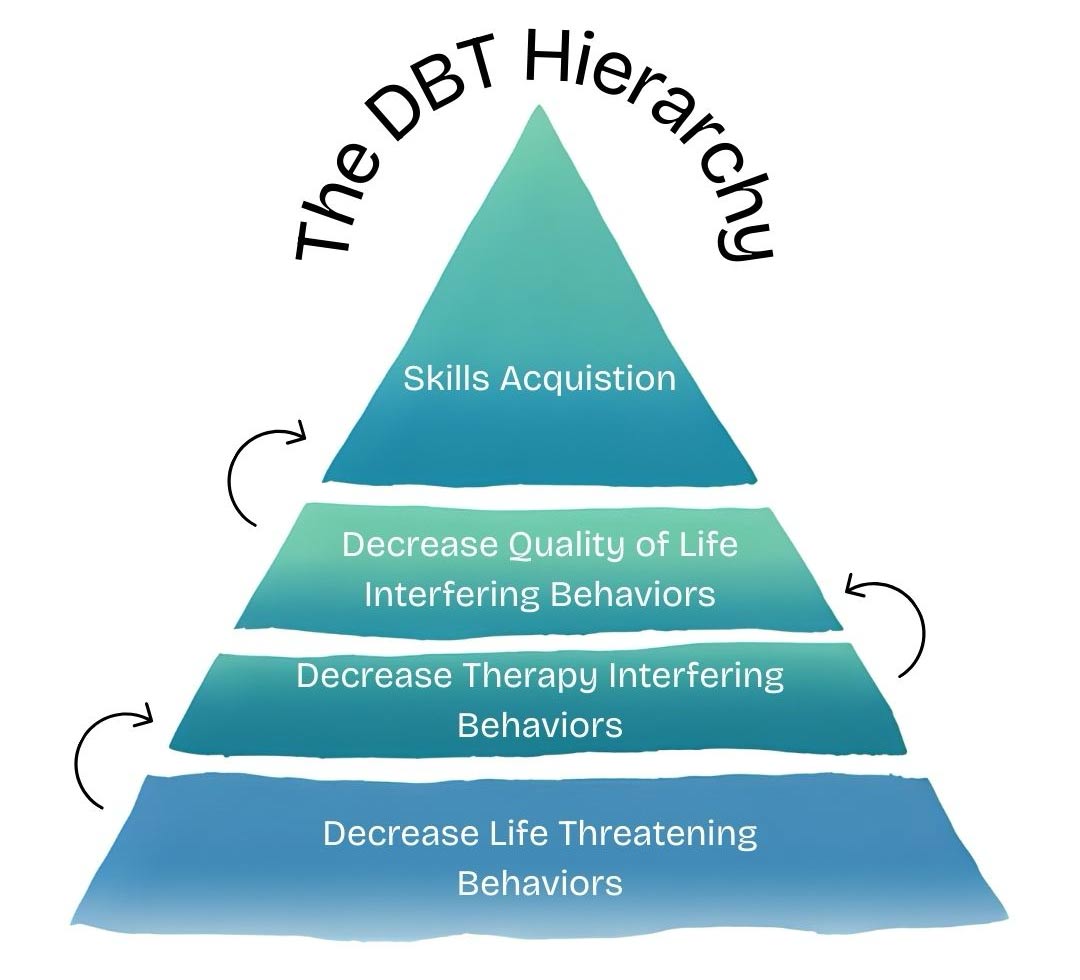
Hierarchy of DBT Therapy Sessions: Why Your Therapist Keeps Asking The Same Questions First
If you’ve ever been in a DBT (Dialectical Behavior Therapy) session and wondered, “Why do we always start with the same questions/topics?” Then you’re not alone! DBT has a built-in hierarchy that helps therapists figure out what to focus on first, and where to go from there.
Think of DBT sessions like a priority inbox. Some stuff is “Urgent!” some is “Important but not on fire,” and some is “We’ll get there after we put out today’s flames.”
Let’s break it down!
1. Decrease Life-Threatening Behaviors
These are behaviors that put your life or safety at immediate risk—suicidal behavior, self-harm, or anything that could cause serious injury. In DBT, therapists are like firefighters: if there’s smoke, they’re grabbing the hose immediately, not asking how your week went.
Why it’s the #1 focus in your therapy session:
We can’t do therapy if you’re not safe, in the hospital, or dead.
2. Decrease Therapy Interfering Behaviors
These aren’t dangerous but they do make therapy… complicated. Think: skipping sessions, showing up late, not doing diary cards (you know you’ve avoided them at least once), shutting down during sessions, or, yes, yelling at your therapist.
Why it’s the #2 focus in your therapy session:
DBT works only if the therapy relationship is working. It’s like trying to go to the gym but refusing to enter the building.
3. Decrease Quality of Life Interfering Behaviors
Once safety and the ability to do therapy are in good shape, sessions move to the things that affect daily life. Such as relationships, work, school, housing or money issues, and substance use.
This is where practical problem-solving happens.
Why it’s the #3 focus in your therapy session:
Because you deserve a life that is worth living!
4. Skills Acquisition
This is the fun stuff that includes learning the actual DBT coping skills:
- Mindfulness
- Distress Tolerance
- Emotion Regulation
- Interpersonal Effectiveness
This category is last not because it’s less important, but because DBT wants to make sure the immediate fires are out before you build a better emotional home.
Why it’s the #4 focus in your therapy session:
Skills stick better when you aren’t in an emergency.
Putting It All Together
Your DBT individual therapy session follows this hierarchy every single time!
Why? Because DBT knows that structure is a safety net. The DBT hierarchy helps make sure therapy stays focused, efficient, and actually helpful.
So next time your therapist asks about “life-threatening behaviors” first thing in the session, you’ll know:
- They’re not being nosy.
- They’re following a life-saving roadmap.
- And yes, you still have to fill out the diary card.