
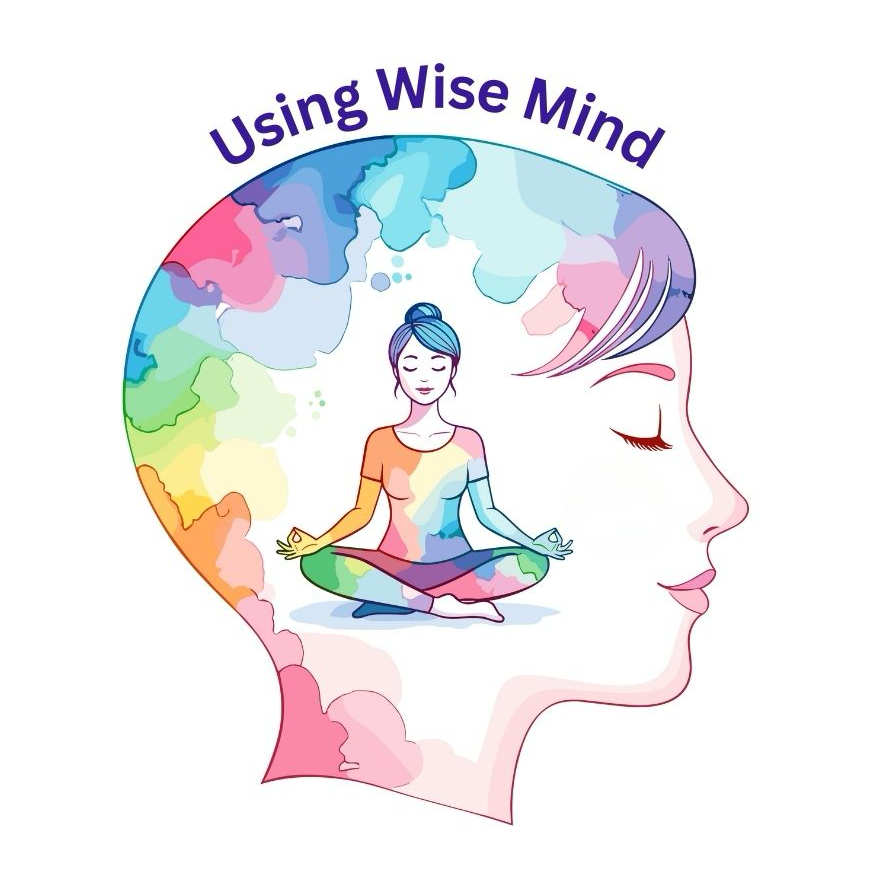
Making decisions can feel overwhelming, especially when emotions are running high or when logic alone doesn’t give you a clear direction. You might feel pulled in two different directions—what your heart wants versus what your head says you should do. When that tension shows up, it’s easy to feel stuck or unsure. This is where Dialectical Behavior Therapy (DBT) introduces a powerful and practical concept called Wise Mind. Wise Mind helps you make choices that honor both your feelings and your ability to think things through.
What Wise Mind Really Is
In DBT, we talk about three different states of mind that show up in decision-making. Sometimes we’re in Emotion Mind, where feelings take over and decisions are driven by urgency, fear, or excitement. Other times we lean heavily into Reasonable Mind, relying only on facts, rules, and logic while pushing emotions aside. Wise Mind lives in the middle. It’s the place where emotion and reason work together instead of competing with each other. Wise Mind is that steady inner voice that acknowledges how you feel while still helping you choose what’s most effective in the long run.
Why Wise Mind Helps With Decisions
When Emotion Mind is in charge, decisions can be impulsive and often lead to regret later. On the flip side, Reasonable Mind can leave you feeling disconnected from yourself if your emotions and values aren’t considered. Wise Mind brings balance. It helps you slow down instead of reacting, make choices that line up with what matters most to you, and feel more confident about the direction you’re taking. Decisions made from Wise Mind tend to feel more grounded and less riddled with second-guessing.
Noticing When You’re Out of Wise Mind
Before you can shift into Wise Mind, it helps to recognize when you’re not there. You might notice emotions feeling intense or urgent, thoughts becoming very polarized, or a strong pressure to decide what you are going to do/feel/say immediately. Sometimes it shows up as ignoring how you truly feel to “be logical,” or letting emotions completely take the wheel. Simply noticing these signs is already a step toward Wise Mind.
How to Access Wise Mind When It Counts
Accessing Wise Mind doesn’t require anything complicated. Often, it starts with pausing. Taking a few slow, intentional breaths can calm your nervous system enough to create space between the situation and your reaction. From there, it can help to gently check in with both mindsets. Ask yourself what your Emotion Mind wants right now, and then what your Reasonable Mind says makes sense. When you bring those answers together, you can ask Wise Mind questions like, “What choice feels right when I consider both facts and feelings?” or “What would my future self thank me for?” Wise Mind answers usually don’t feel rushed or dramatic. They tend to feel calm, steady, and clear—even if the decision itself is still hard.
What Wise Mind Looks Like in Everyday Life
Wise Mind shows up in small, everyday moments more often than we realize. It might look like acknowledging hurt feelings in a friendship while still communicating calmly and setting boundaries. It can mean choosing classes or commitments by balancing academic goals with your stress level. In social situations, Wise Mind helps you decide when to say yes and when to say no based on both comfort and responsibility. It also shows up in personal goals – Wise Mind often chooses progress over perfection.
Wise Mind Gets Stronger With Practice
Tough decisions are part of learning what works for you, and you don’t have to face decisions feeling torn or overwhelmed. Wise Mind offers a way to move forward with balance, clarity, and confidence, even when situations are complicated. Wise Mind isn’t about making the “perfect” choice every time. It’s about making thoughtful decisions with self-respect.
You are still progressing and learning, you won’t always get it exactly right—and that’s okay. Each time you pause, check in with both emotion and reason, and listen for that quieter inner voice. When you do, Wise Mind becomes easier to access. Like any skill, it strengthens with practice.When you are unsure how to proceed, try pausing and asking yourself, “What does my Wise Mind say?” More often than not, that answer leads you forward with the most peace.