
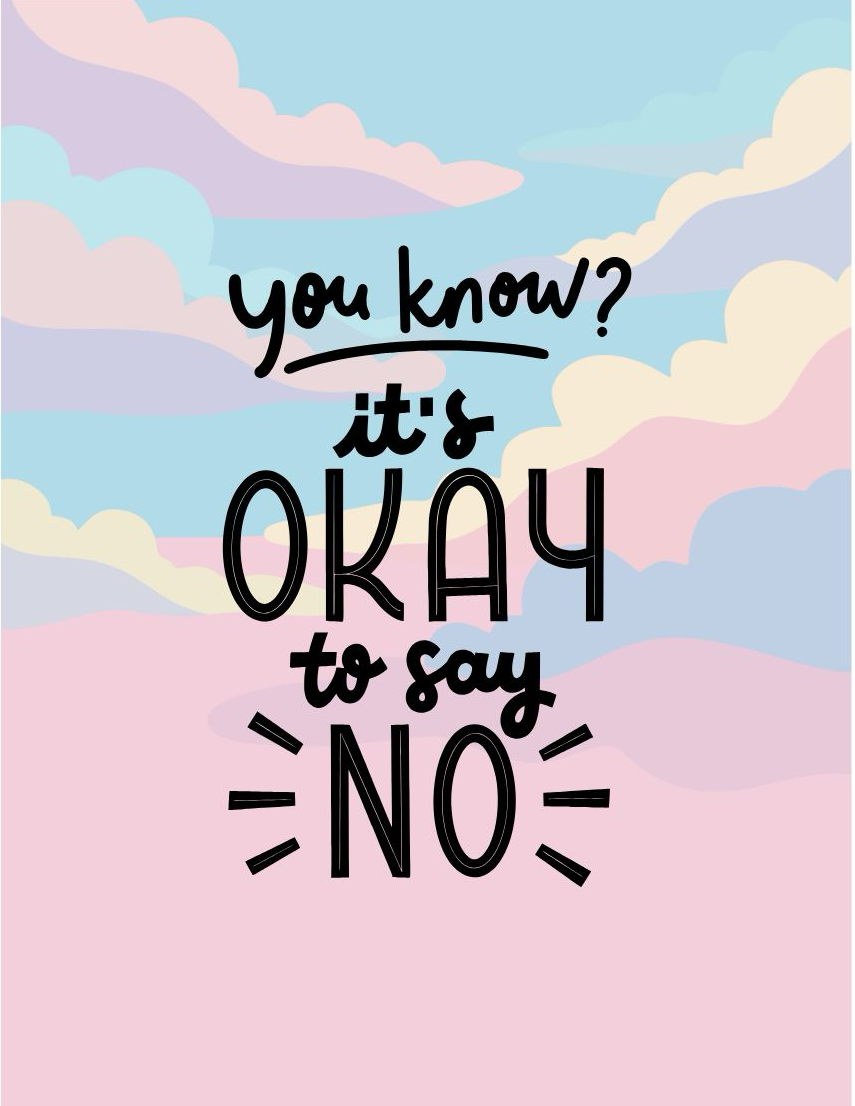
Raise your hand if you’ve ever said “yes” when every cell in your body was screaming ABSOLUTELY NOT!!!
And then you spent the next 48 hours feeling resentful, exhausted, and mildly annoyed at yourself.
Welcome to the club. You are very much not alone.
In Dialectical Behavior Therapy (DBT), Interpersonal Effectiveness skills are about balancing three important things at the same time: getting what you want or need, maintaining your relationships, and honoring your self-respect. One of the hardest—and most powerful—skills in this area is learning how to say no without spiraling into guilt, anxiety, or over-explaining.
Why Saying No Feels So Hard
For many people, saying no doesn’t just feel uncomfortable—it feels dangerous.
Thoughts often show up like: They’ll be mad at me. I’m being selfish. I’ll disappoint them. I’m a bad friend, partner, employee, or human.
DBT reminds us of an important truth here: feelings are not facts. Just because guilt shows up doesn’t mean you’ve done something wrong. Sometimes guilt is simply an uninvited guest with very loud opinions.
DBT Reframe: Saying No Isn’t Mean, It’s Honest
When you say “yes” but mean “no”, something important happens internally. You’re ignoring your own needs, draining your emotional energy, and often planting the seeds of resentment.
Over time, this can damage relationships far more than a respectful “no” ever would.
DBT teaches that clear, honest boundaries actually support healthier relationships. Boundaries don’t have to be walls—they can be bridges. Saying no in a direct and respectful way allows people to know where you stand, instead of guessing or dealing with unspoken frustration later.
Using DBT Skills to Make “No” Easier
Saying “no” gets easier when you use skills together instead of relying on willpower alone.
One helpful starting point is to use the skill Check the Facts. Before responding, pause and ask yourself whether you genuinely have the time or energy to do what’s being asked. Notice if you’re saying “yes” out of fear rather than choice. You might also ask whether you would expect someone else to agree to this if the roles were reversed. If the answer is “no”, that information matters – so do not ignore it.
Another powerful tool is the DEAR MAN, a DBT skill designed for assertive communication. You don’t need a long explanation to say “no”. A brief, clear statement is often more effective. For example:
“This week I’ve got a lot on my plate, and I am nervous I won’t complete my commitments if I agree to help out. This time I’m going to decline your offer for me to be involved. I appreciate you thinking of me.”
You can also use an abbreviated DEAR MAN and say: “I’ve got a lot on my plate this week, and I won’t be able to help out. I appreciate you thinking of me.”
That’s it. A full sentence. No apology required.
Why Over-Explaining Keeps You Stuck
Many people respond to guilt by over-explaining. It often sounds like a rapid list of reasons, apologies, and justifications meant to make the no feel more acceptable.
The problem is that over-explaining sends the message—both to others and to yourself—that your boundary needs to be earned.
It doesn’t.
“No” is a complete sentence. If you want to add kindness, you absolutely can. Just aim to add kindness, not justification.
When Guilt Still Shows Up Anyway
Here’s an important reality check: even when you do everything “right,” guilt may still appear.
DBT doesn’t promise that uncomfortable emotions will disappear. Instead, it teaches that you don’t have to obey every emotion that shows up. You can feel guilty and still keep your boundaries. You can feel uncomfortable and still choose self-respect.
Think of guilt like a backseat passenger. It might talk loudly, but it doesn’t get to drive.
The Bottom Line
Every time you say no to something that harms your well-being, you are saying yes to your mental health, your goals, and your self-respect.
That isn’t selfish. That’s effective.
So go ahead—practice your no.